
What you definitely shouldn’t do when making caramel at home
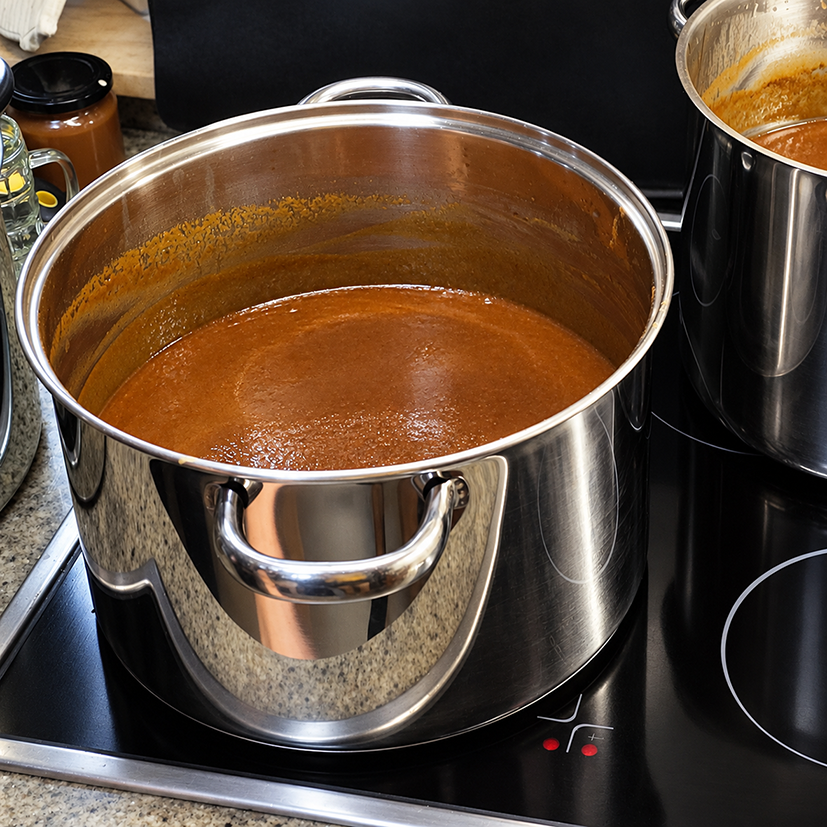
What You Definitely Shouldn’t Do When Making Caramel at Home
Making caramel looks simple.
Take some sugar. Heat it. Add a few other things.
You get caramel.
Theoretically.
In practice, caramel is one of those foods that can remind you within minutes that physics and chemistry still have a fairly considerable advantage over humans.
So if you’ve decided to make caramel at home, we have a few tips for you.
Not what to do.
What definitely not to do.
1. Don’t Walk Away from It
There are foods you can leave for a moment while you hang up the laundry, reply to a message or investigate why it has suddenly gone suspiciously quiet in the bathroom.
Caramel is not one of them.
Sugar can spend quite a long time pretending that absolutely nothing is happening.
Then it starts to turn golden.
And approximately one read message and half-written reply later, you have something in the pan that tastes like a burnt tyre.
The difference between beautiful caramel and burnt sugar can be surprisingly brief.
So stay with it.
Instagram can wait.
Caramel can’t.
2. Don’t Touch It
This sounds like advice for children.
It isn’t.
Molten sugar reaches temperatures well above 100°C and, unlike hot water, it has one particularly unpleasant property:
it sticks.
If you splash hot water on your hand, the water runs off.
If you splash caramel on your hand, it stays there.
And continues transferring heat in exactly the place where you really don’t want it.
So no tasting it with your finger, no “I’ll just check whether it’s set yet”, and if you drip caramel onto the worktop, give it a moment.
Caramel is a dessert.
While you’re making it, it’s also a very convincing demonstration of thermodynamics and a quick and easy way to seriously hurt yourself.
3. Don’t Pour Cold Cream into Scorching-Hot Caramel Without Thinking
You have extremely hot sugar.
And you have cream straight from the fridge.
What could possibly happen?
Quite a lot.
When you add the cream, the mixture will foam vigorously and can rise much higher than you expect.
So use a sufficiently large pan and add the cream carefully.
A small saucepan filled almost to the brim is not a sign of courage.
It’s an experiment that may not have a sweet ending.
4. Don’t Grab the First Pan You Find
Caramel needs room.
Not only for stirring, but especially because it can foam up dramatically when you add the cream.
So if the ingredients look as though they’ll fit into the pan “just about”, use a bigger one.
Just about is not enough for caramel.
A pan with high sides and a sufficiently heavy base is ideal, as it helps distribute the heat evenly.
Because caramel that’s burning in one spot while still considering whether to melt in another is not what we’re aiming for.
5. Don’t Stir It with Whatever Happens to Be Lying Next to the Hob
A wooden spoon is a wooden spoon, a spatula is a spatula and plastic is plastic.
Except when you’re making caramel, you’re working with seriously high temperatures, and not every kitchen utensil is designed to cope with them.
Use utensils that are genuinely intended for high temperatures – for example, a good heat-resistant silicone spatula or a wooden spoon.
A cheap plastic spatula that starts bending, melting or contributing pieces of itself to your caramel is not a flavour we recommend.
And if you use a wooden spoon, make sure it’s clean and hasn’t absorbed any strong smells from previous cooking.
Caramel with subtle notes of yesterday’s garlic goulash is not currently part of our range.
And it definitely never will be.
6. Don’t Stir the Sugar Like Mad
This is where caramel gets a little more treacherous.
Because it also depends on how you’re making it.
Some methods involve dissolving the sugar in water. And when you’re cooking sugar syrup, unnecessary stirring or introducing sugar crystals from the sides of the pan can encourage something you really don’t want in smooth caramel:
recrystallisation.
Instead of a smooth mixture, tiny sugar crystals begin to form and the caramel can gradually develop a grainy, sandy texture.
So this rule does not apply:
“The more I stir it, the smoother it’ll get.”
With sugar, sometimes almost exactly the opposite is true.
7. Don’t Assume Sugar Can’t Betray You Just Because You Did Everything Right
Recrystallisation deserves a section of its own.
Because it’s one of those moments when you’re standing over the pan, you followed the recipe, you didn’t burn anything, you didn’t wander off – and yet your beautiful caramel starts turning into something resembling sweet sand.
Sugar is very keen to form crystalline structures.
Sometimes just a few sugar crystals on the side of the pan are enough to provide sites around which more crystals can begin to form. Recrystallisation can also be triggered by tiny impurities or particles introduced into the mixture from your cookware or utensils.
This is called nucleation.
One tiny seed can therefore become the beginning of a much bigger problem.
That’s why some caramel-making methods involve washing sugar crystals from the sides of the pan, and why there are various other techniques for reducing the risk of recrystallisation.
And the most treacherous part?
Once recrystallisation really gets going, more heat and frantic stirring are not a magical route back to perfectly smooth caramel. Instead, you may end up with a pan full of grainy sugar mass and a very bad mood.
So yes – two people can follow exactly the same recipe and one ends up with beautifully smooth caramel while the other starts googling:
“Why is my caramel grainy?”
Welcome to confectionery.
8. Don’t Panic When It Suddenly Turns into a Weird Lump
You add the cream and your beautifully liquid caramel suddenly transforms into something resembling a geological formation.
Congratulations.
You’ve just experienced one of the classic stages of making caramel at home.
When it comes into contact with a cooler liquid, some of the caramelised sugar can quickly harden.
That doesn’t necessarily mean it’s over.
With further gentle heating, it will often dissolve again.
So don’t panic.
And above all, don’t start furiously attacking it with a wooden spoon as though it owes you money.
9. Don’t Try to Save Burnt Caramel
This one hurts.
Especially when you’ve just used the last of the sugar.
But there comes a point when the best thing you can do is accept defeat. Mountaineers know a thing or two about that.
If the caramel is too dark, smoking and distinctly bitter, more cream, butter or optimism won’t bring it back.
You can dilute the consistency.
You can’t boil away the burnt flavour.
Sometimes the highest culinary skill is knowing when to stop calling the contents of the pan caramel.
10. Don’t Taste It Straight from the Spoon
Yes, we already said it’s hot.
We’re saying it again.
Because humans have a remarkable ability to know that something is hot and put it in their mouths anyway.
And plenty of people do it completely automatically.
You stir. You lift out the wooden spoon or teaspoon. And before your brain has had time to remind you that this isn’t soup but molten sugar, it’s heading towards your mouth.
It’s a bit like looking down the barrel of a gun and asking:
“Why the hell didn’t it fire?”
And bang.
Too late.
If you want to taste the caramel, put a small amount on a cold plate and wait.
Your taste buds will thank you.
And you’re going to need them again.
For caramel, for example.
11. Don’t Expect Hot Caramel to Be as Thick as Cold Caramel
This is a common trap.
You look into the pan and think the caramel is too runny.
So you cook it a little longer.
And a little longer.
And just one more minute, to be safe.
Then it cools.
And you can use it to grout the bathroom tiles.
Caramel thickens considerably as it cools. So don’t judge its consistency only by how it looks on the hob.
Put a small amount on a cold plate and let it cool briefly. You’ll get a much better idea of what the final consistency will actually be.
12. Don’t Use the Cheapest Ingredients Just Because “It All Gets Cooked Anyway”
With sugar, you probably won’t notice much difference.
With the other ingredients, you will.
If you’re making cream caramel, cream isn’t something you add simply so the ingredients list doesn’t look suspiciously short.
It’s one of the main ingredients, and its quality affects both the flavour and the final texture.
High-fat cream will do a rather different job from a product that appears to have run past some cream very quickly and from a safe distance.
The same applies to butter.
Butter that has seen better days or absorbed the aromas of your fridge can add a flavour note you definitely weren’t looking for.
And with salted caramel, the salt matters too. Good sea salt or fleur de sel can beautifully enhance and complement the final flavour.
When caramel contains only a handful of basic ingredients, there aren’t many places for poor quality to hide.
13. Don’t Start Experimenting with Everything at Once
A little rum?
Great idea.
Chilli?
Why not.
Orange?
Interesting.
Coffee?
Of course.
Rum, chilli, orange and coffee all at once?
Perhaps you haven’t just invented a new flavour.
Perhaps you’ve simply refused to make a decision.
Caramel is a wonderfully versatile base for other flavours, but it usually works better when one or two of them are actually given room to shine.
Sometimes restraint is the best ingredient.
It may be difficult to find in supermarkets, but it’s worth keeping some at home.
And Most Importantly: Don’t Tell Yourself That Buying Caramel Is Cheating
Making good caramel at home is fun.
And we definitely recommend trying it sometime.
Just as we recommend baking your own bread sometime, making homemade pasta or growing your own tomatoes.
But we don’t have to make absolutely everything ourselves.
We don’t usually grind our own flour just because we want to bake a cake. Most of us don’t pipe our own ladyfingers onto a baking tray before making tiramisu, and we don’t have to bake our own butter biscuits before we can start making a cheesecake.
We can.
But that’s a slightly different level of gastronomy.
Likewise, if you fancy pancakes, cheesecake or an ice cream sundae in the evening, you don’t have to fight a pan of molten sugar every single time – along with the right temperature, the right consistency and sugar crystals that one day decide to show you who’s really in charge.
Because someone has already stood over that pan for you.
Us, for example.
And because we do it repeatedly, we have one small advantage:
we already know what definitely not to do.
So you can skip straight to the part where you open the jar.
Which, coincidentally, is also our favourite part of making caramel.
And if, after reading the previous thirteen points, you think we’re trying to scare you a little:
We’ve already thrown away enough burnt pans for all of us.